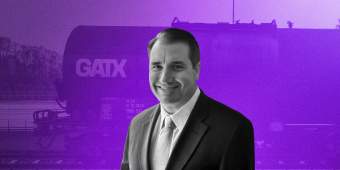
You can track a pizza to your door. Most companies can't tell you where their own railcar is.
That gap is what this episode is about. Jason Hehman sits down with Jared deVries, who spent fifteen years learning rail from nearly every seat in the industry, from conductor to commercial leader to independent advisor, to talk about why an industry this essential has been slower to modernize than most people assume, and what it will actually take to close the gap. After the conversation, Jason is joined by TXI's Elie Wu for a closing discussion on what it all means for the industry.
This is a conversation about ownership, data, and what happens when an industry finally has the information it needs but hasn't figured out how to use it yet.
The experts
Host: Jason Hehman, Industrials Vertical Lead at TXI and founder of the Modern Industrialist Xchange (MIX) community. Jason works across technology, operations, and workforce in manufacturing and industrial sectors.
Guest: Jared deVries, founder of JW Rail Solutions. Jared spent twelve years at CP Rail, now CPKC, in marketing, pricing, and sales, and was a qualified conductor who ran trains across Canada during strikes and crew shortages.
Also featured: Elie Wu, Growth and Strategic Alliances Lead at TXI, who joins Jason after the interview for a closing discussion on what Jared's insights mean for the industry.
Key takeaways:
1. Most railcars aren't owned by railways at all.
One of the most common misconceptions in rail is who actually owns the equipment. Jared puts the number at roughly 12 to 15 percent of railcars owned by the railways themselves. The other 85 to 88 percent belongs to lessors, companies that own the cars but not the commodities inside them, and lease that equipment out, sometimes to the railways as well. That ownership split shapes almost everything else in the episode: who wants what data, who's willing to pay for telematics, and why full industry adoption is so much harder than putting sensors on one company's fleet.
2. Rail's data problem was never a shortage. It was a wall between systems.
For years, railways have run sophisticated detectors that catch hot wheels, hot boxes, and car locations as trains pass. The problem wasn't the sensors. It was that mechanical data stayed with the mechanical department, operational data stayed with operations, and nobody outside those silos could see across the business. Jared traces some of the shift back to CP Rail bringing in an ERP system around 2012, a multi-year effort just to get internal systems talking to each other before anyone could think seriously about predictive analytics.
3. Telematics means something different depending on who owns the car.
A lessor wants to know if a car's mechanical health is holding up. A shipper wants to know where their car is right now and when it's arriving. A railway wants operational and safety insight, like whether a hand brake was left engaged or a coupling event was too hard. Jared argues that this is exactly why full-scale adoption and regulation are both moving slowly. Everyone is asking telematics to solve a different problem, and the return on investment doesn't show up until enough of the industry, not just one fleet, is generating the same kind of visibility.
4. The real bottleneck isn't more data. It's turning data into a decision.
Jared's clearest advice to shippers isn't about buying more technology. It's understanding what you already have. Many of the companies he works with don't think they have a rail problem until he starts asking questions, and demurrage costs, pricing pressure, and yard visibility gaps start surfacing. The fix usually isn't a new system. It's a clearer view of the transportation network they already operate, and a willingness to ask whether the standard route or approach even makes sense anymore.
After the interview, Jason is joined by Elie Wu
Once the conversation with Jared wrapped, Jason brought in Elie Wu, TXI's Growth and Strategic Alliances Lead, to react to what they'd just heard. A few points from their discussion stood out:
Telematics isn't the end goal. It's the foundation. Elie's read, echoed from conversations at recent rail and maritime conferences, is that what the industry is really asking for is the rail equivalent of a consumer tracking app, and telematics is the piece that makes that kind of visibility possible in the first place.
On AI, Elie's instinct is to slow down before speeding up. Before asking where AI can add value, the more useful question is whether an organization's data is even talking to itself yet. Without that foundation, an intelligence layer has little to work with.
The generational talent gap Jared described mirrors what TXI sees across manufacturing. Elie's take is that a clearer story about where technology is taking rail, especially around AI and modernization, could be part of what makes the industry a more compelling place for new talent to build a career.
Why this conversation matters for industrial leaders
Rail is one of the most essential and least visible parts of the industrial supply chain. It moves nearly everything, yet most of the companies that depend on it are still tracking railcars the way they tracked them decades ago: phone calls, spreadsheets, and someone walking the yard writing down car numbers. Jared deVries has spent fifteen years inside that gap, first running trains himself, then helping shippers make sense of a system that's more collaborative and more competitive than it looks from the outside.
If you're responsible for supply chain visibility, fleet strategy, or figuring out where technology actually moves the needle in a slow-to-modernize industry, this one is worth your time.
The Modern Industrialist Xchange Podcast drops new episodes monthly. Follow us on YouTube, Spotify, Apple Podcasts, Amazon Music, and RedCircle to stay in the conversation.